
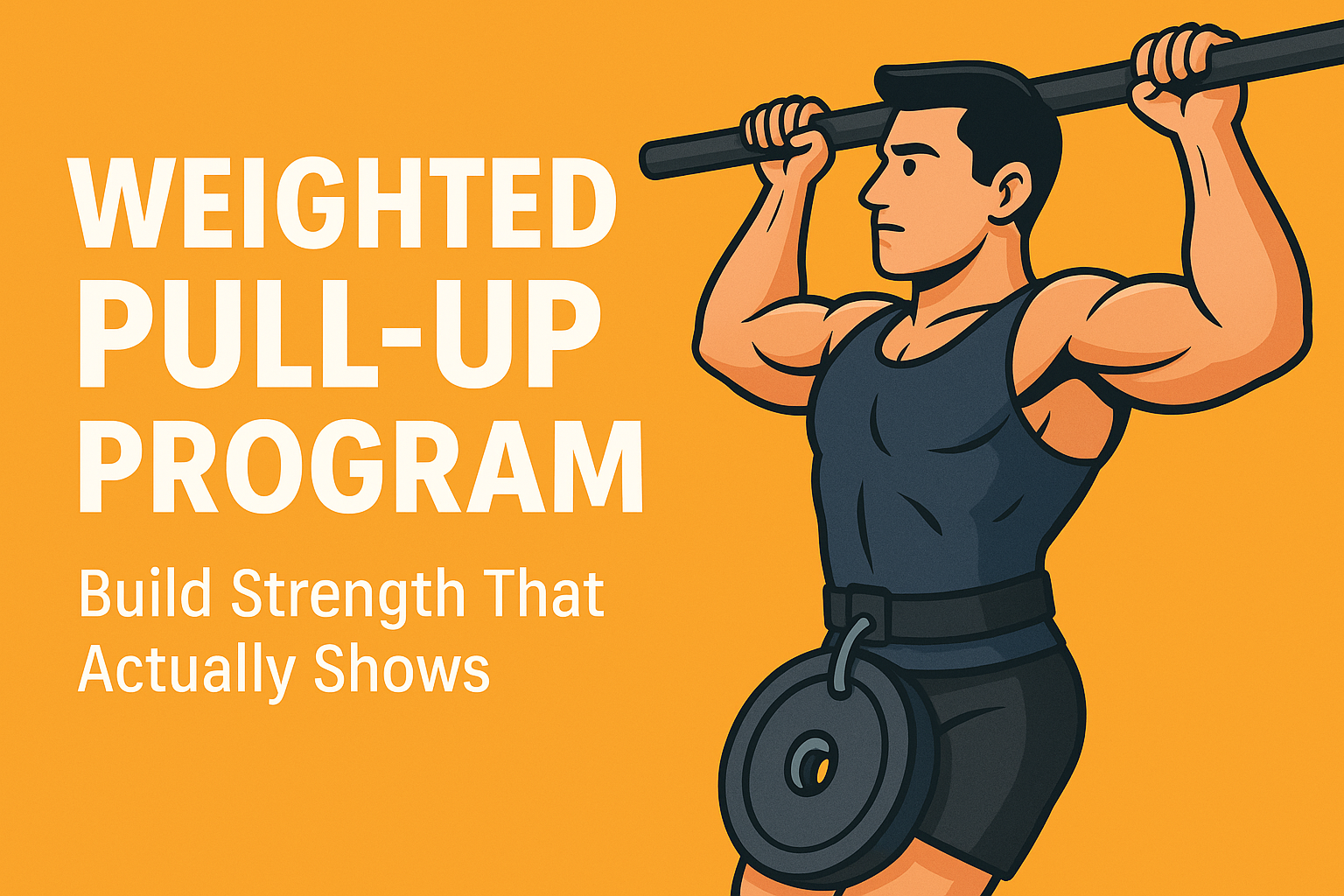
Weighted Pull Up Program: Build Strength That Actually Shows
Pull-ups are great. But if you want serious upper body power — the kind that builds wide lats, thick arms, and real strength — then weighted pull-ups are the next step.
👉 DOWNLOAD the FREE Weighted Pull Up Program
Why Weighted Pull-Ups Are Essential
Once you can do 10–15 clean bodyweight pull-ups, adding weight is the most effective way to keep progressing. Here’s why:
- Progressive Overload — Just like squats or bench press, you need to increase resistance over time.
- Upper Body Growth — Lats, traps, biceps, forearms — everything gets thicker and stronger.
- Functional Strength — Useful in real life. Useful in combat sports. Useful for dominance.
But here’s the thing: most people throw on a plate and hope for the best.
That’s why structure matters.
The Problem: No Strategy = No Progress
Weighted pull-ups are simple in theory. But without a system, progress stalls fast. You either:
- Add too much weight too soon
- Burn out your joints
- Lose good form
- Or just don’t improve
That’s where a smart training plan comes in. One that actually respects progression, volume, and recovery.
A Smarter Way to Train
If you’re ready to take your pull strength seriously, I’ve created a step-by-step training approach built specifically for:
✅ People who can do at least 8–10 bodyweight pull-ups
✅ Lifters who want real-world back and arm strength
✅ Athletes who care about function and size — not just gym numbers
This isn’t random volume. It’s focused training with purpose.
👉 Start the Weighted Pull Up Program
What to Expect
Inside the training you’ll find:
- 💪 How often to train (and when to rest)
- 🧠 How to balance bodyweight reps with added weight
- 🛠️ Progression that actually makes sense
- 🔁 Repeatable format you can build on long term
Final Thoughts
Strength is built — not guessed.
If you’re ready to stop spinning your wheels and actually get stronger at pull-ups, begin here. No hype. Just a smart, effective way forward.
👉 Want to learn more about weighted calisthenics? Check out this detailed guide from BarBend
